




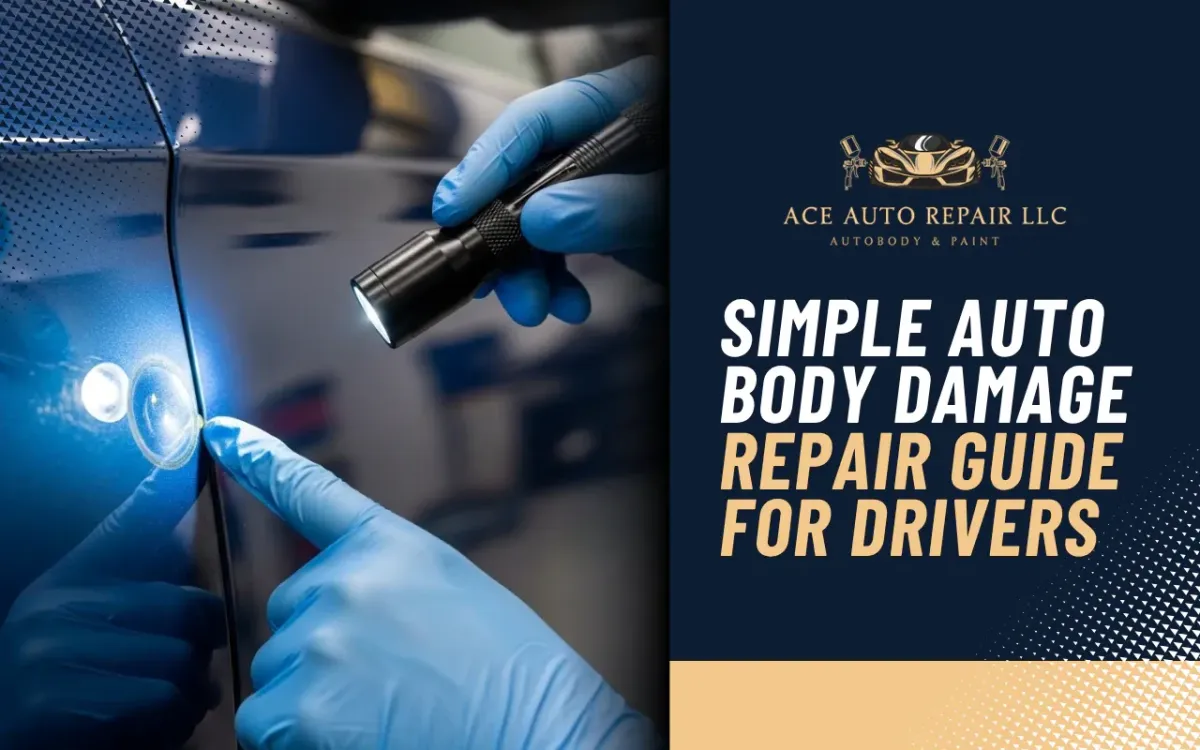
Simple Auto Body Damage Repair Guide For Drivers
Our auto body damage repair guide helps drivers understand small dents, scratches, chips, and bumper marks without feeling lost. Small damage may look stressful at first, but clear steps can make the next move easier.
At Ace Auto Repair LLC, we know many drivers want honest guidance before choosing repair work. This guide explains what you can inspect, what may be safe to handle, and when a trained team should review the damage.
Common Types Of Car Body Damage Explained Clearly
Car body damage can show up as scratches, dents, chips, scuffs, or bent panels. Some marks only affect the paint surface, while deeper damage can change the shape of metal or plastic parts.
Minor car body damage may include small nicks, light bumper scrapes, or shallow dents after a low-speed bump. However, deep cracks, sharp creases, or exposed metal need closer care to prevent rust and bigger problems.
Easy Inspection Steps Before Starting Any Repair
Before using any auto body damage repair guide, inspect the vehicle in bright light. Walk around slowly, look from different angles, and feel the surface with your hand to find dents that are hard to see.
Check whether the paint is cracked, chipped, or only lightly scratched.
Look for bent panel edges, loose bumper areas, or hidden cracks.
Write down each damaged spot before planning the repair steps.
Also, compare each mark by size and depth. If the damage looks deep or the panel no longer lines up well, our team at Ace Auto Repair LLC can help you decide the safest next step.
Basic Tools That Make Small Repairs Easier
Simple repairs often need basic tools. A dent puller, fine sandpaper, body filler, touch-up paint, clear coat, clean towels, gloves, and eye protection can help with small surface problems.
A dent repair guide kit may also include glue tabs or a suction cup for shallow dents. However, always clean the area first because dirt can scratch the paint during repair.
Dent And Scratch Repair Tips For Beginners
Small dents without sharp lines are usually easier to handle. Clean the surface, attach the puller, and use gentle pressure. Do not rush, because pulling too hard can stretch the metal.
Use polishing compound for very light clear coat scratches.
Utilize touch-up paint when the scratch reaches the color layer.
Apply thin coats and let each layer dry before adding more.
This auto body damage repair guide keeps the process simple, but some dents still need special tools. When the paint is cracked or the metal is sharply folded, professional repair is often safer.
Bumper And Panel Damage Needs Careful Review
Bumper damage repair depends on the material and the depth of the mark. Light scuffs may need sanding and paint, while cracks may need plastic repair products or a full part review.
Panel damage repair also needs care because a panel can hide deeper stress. For related repair options, visit our auto repair service information to see how we support safer decisions.
Hail Damage And Paint Chips Require Fast Action
Hail damage vehicle repair works best when the paint is not broken. Paintless dent repair may move the metal back into shape while keeping the original finish in place.
Check if hail dents are smooth or sharp.
Look for cracked paint before trying any pull method.
Fix paint chips quickly so rust does not spread.
With Ace Auto Repair LLC, you can ask clear questions before choosing a repair path. Our goal is to help you protect the vehicle’s look, safety, and value with practical guidance.
Frequently Asked Questions
Can I repair every dent at home?
No. Small smooth dents may be possible to repair at home, but sharp creases, cracked paint, or bent panel edges often need trained repair work.
When should bumper damage be checked professionally?
Bumper damage should be checked when there are cracks, loose sections, deep cuts, or signs that the bumper no longer sits firmly in place.
Is touch-up paint enough for deep scratches?
Touch-up paint can help small chips and scratches, but deep damage may need sanding, primer, paint, and clear coat to protect the surface well.
Can hail dents damage the paint later?
Yes. Even if the paint looks fine, some dents can stress the surface. A careful inspection helps lower the risk of later cracking or peeling.
How often should I inspect my car body?
Inspect the body after storms, parking lot bumps, road trips, and regular washes. Early checks make small damage easier to manage.
Smart Prevention Helps Protect Your Car Longer
Regular washing removes grit that can scratch paint. Wax or sealant adds a helpful layer against sun, rain, and road dirt. Covered parking can also reduce hail damage and weather wear.
This auto body damage repair guide is a simple starting point for better care. When you need personal guidance, contact our repair team. At Ace Auto Repair LLC, we explain options clearly before any work begins.